

Hey there! As a supplier of Black Titanium Bolts, I often get asked about the electrical conductivity of these bolts. It's a pretty common question, especially in industries where electrical properties matter a whole lot. So, let's dig into this topic and see if black titanium bolts have good electrical conductivity.
First off, let's talk a bit about titanium itself. Titanium is a metal that's well - known for its strength, corrosion resistance, and low density. It's used in a wide range of applications, from aerospace to medical devices. But when it comes to electrical conductivity, titanium isn't exactly at the top of the list.
Metals like copper and silver are excellent conductors of electricity. They have a high number of free electrons that can move easily through the metal lattice, allowing for efficient flow of electric current. Titanium, on the other hand, has a relatively low electrical conductivity compared to these highly conductive metals.
The electrical conductivity of a material is measured in siemens per meter (S/m). Copper has an electrical conductivity of around 5.96×10⁷ S/m, while titanium has a conductivity of about 2.38×10⁶ S/m. That's a significant difference! So, in its pure form, titanium is not a great conductor of electricity.
Now, what about black titanium bolts? The "black" in black titanium bolts usually refers to a surface treatment. There are different methods to create this black finish, such as physical vapor deposition (PVD) or anodizing. These treatments are mainly done for aesthetic reasons, to give the bolts a sleek, black look, and also to improve their wear resistance.
The surface treatment doesn't really change the fundamental electrical properties of the titanium core. So, the electrical conductivity of black titanium bolts is still largely determined by the titanium metal itself. Since titanium has low electrical conductivity, black titanium bolts also don't have excellent electrical conductivity.
However, there are situations where the low electrical conductivity of black titanium bolts can actually be an advantage. For example, in some electrical systems, you might want to isolate certain components to prevent electrical interference. Black titanium bolts can be used as insulators in these cases. They can hold parts together without allowing unwanted electrical current to pass through.

In other applications, though, the low conductivity can be a drawback. If you're working on a project where high - speed electrical transmission is required, you might need to look for other types of bolts made from more conductive materials.
Let's take a look at some real - world scenarios. In the automotive industry, electrical systems are becoming more and more complex. Some parts need to be electrically isolated, and black titanium bolts can be a good choice here. They can be used to secure components in the electrical control units without causing electrical shorts.
In the construction of electronic devices, like smartphones or laptops, the need for proper electrical insulation is also crucial. Black titanium bolts can be used to assemble the internal parts, ensuring that there's no unwanted electrical connection between different components.
But if you're dealing with power transmission lines or high - current electrical circuits, black titanium bolts probably won't be your first pick. You'd want bolts made from copper or aluminum, which have much higher electrical conductivity.
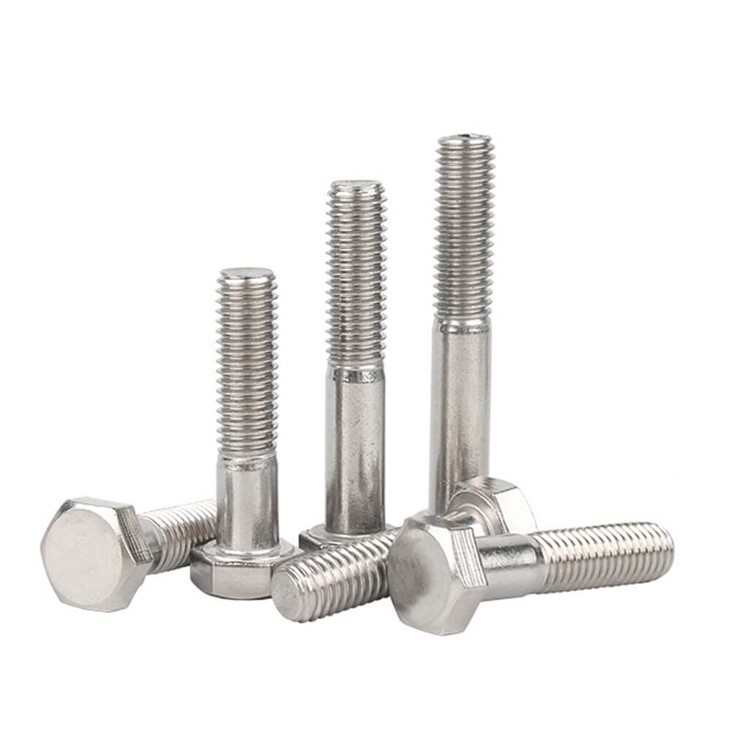
Now, I want to mention one of our products, the Titanium Half Thread Hexagon Bolt. This bolt is made from high - quality titanium and can be finished in black. It's suitable for a variety of applications where the combination of strength, corrosion resistance, and the option of a black finish is desired.
So, to sum it up, black titanium bolts do not have good electrical conductivity compared to metals like copper and silver. But their low conductivity can be useful in certain applications where electrical isolation is needed.
If you're in the market for black titanium bolts or have any questions about their properties and applications, don't hesitate to reach out. Whether you need them for a project that requires electrical insulation or just for their aesthetic appeal, we're here to help. We can provide you with the right bolts for your specific needs.
References
- "Materials Science and Engineering: An Introduction" by William D. Callister Jr. and David G. Rethwisch
- Technical papers on titanium surface treatments and electrical properties from industry research institutions.


