

Hey there! As a supplier of titanium bolts, I often get asked a bunch of questions about these nifty little fasteners. One question that pops up quite a bit is, "Do titanium bolts expand or contract more than other bolts with temperature changes?" Well, let's dive right into it and find out!
First off, let's talk about what expansion and contraction mean in the context of bolts. When the temperature goes up, materials tend to expand, and when it goes down, they contract. This is due to the fact that as the temperature increases, the atoms in the material start moving around more vigorously, taking up more space. And when the temperature drops, they slow down and get closer together.
Now, different materials have different rates of expansion and contraction. This is measured by a property called the coefficient of thermal expansion (CTE). The CTE tells us how much a material will expand or contract per degree of temperature change. A higher CTE means the material will expand or contract more with a given temperature change.
So, how does titanium stack up against other common bolt materials like steel and aluminum? Well, titanium has a relatively low coefficient of thermal expansion compared to steel and aluminum. Steel typically has a CTE in the range of about 10 - 13 x 10^-6 /°C, while aluminum has a CTE of around 23 x 10^-6 /°C. Titanium, on the other hand, has a CTE of approximately 8.6 x 10^-6 /°C.
What does this mean in practical terms? It means that titanium bolts will expand and contract less than steel and aluminum bolts when exposed to temperature changes. This can be a huge advantage in applications where dimensional stability is crucial. For example, in aerospace and high - precision machinery, even small changes in the size of bolts due to temperature variations can cause problems. Titanium's lower CTE helps ensure that the bolts maintain their dimensions more accurately, reducing the risk of loosening or misalignment.
Let's take a look at an example. Suppose you have a machine that operates in an environment where the temperature can vary significantly, say from - 20°C to 80°C. If you use aluminum bolts, they will expand and contract quite a bit more than titanium bolts over this temperature range. This could lead to the bolts becoming loose over time, which might compromise the safety and performance of the machine. With titanium bolts, the amount of expansion and contraction is much smaller, so the bolts are more likely to stay tight and secure.
Another aspect to consider is the long - term durability of the bolts. When bolts expand and contract repeatedly due to temperature changes, it can cause stress on the material. Over time, this stress can lead to fatigue and eventually failure of the bolt. Since titanium bolts expand and contract less, they are subject to less stress from thermal cycling. This means they are likely to have a longer lifespan compared to bolts made from materials with higher CTEs.
Now, I know some of you might be thinking, "But titanium is more expensive than steel and aluminum. Is it really worth it?" Well, it depends on your specific application. If you're working on a project where precision and reliability are of the utmost importance, the extra cost of titanium bolts can be well worth it. The reduced risk of failure due to thermal expansion and contraction can save you a lot of money in the long run by avoiding costly repairs and downtime.
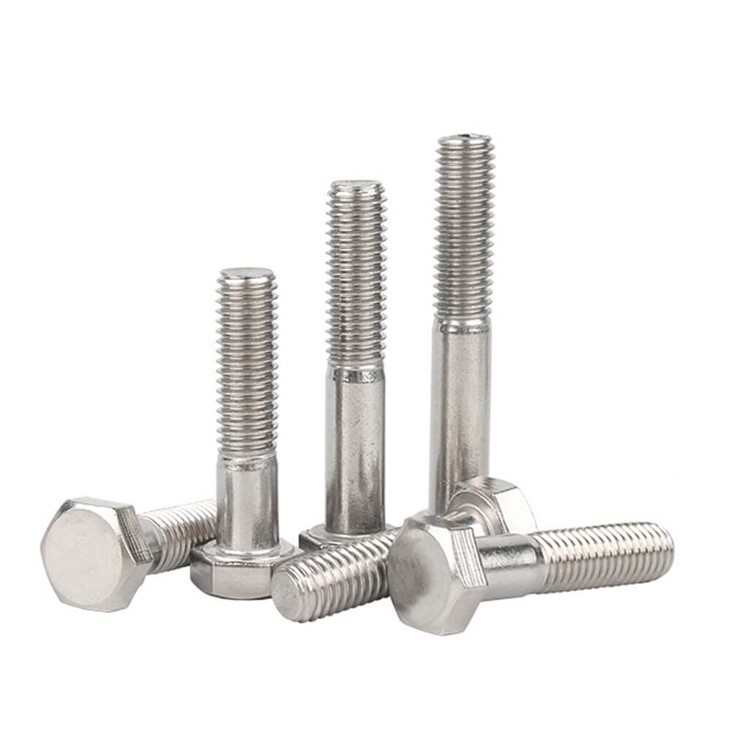
If you're interested in our Titanium Half Thread Hexagon Bolt, it's a great option that combines the benefits of titanium with a practical design. The half - thread design allows for more flexibility in installation and use, and the titanium material ensures excellent performance even in challenging temperature conditions.
So, if you're in the market for high - quality bolts that can handle temperature changes with ease, I'd highly recommend considering titanium bolts. Whether you're an engineer working on a new aerospace project or a manufacturer looking for reliable fasteners for your machinery, we've got you covered. We offer a wide range of titanium bolts in different sizes and specifications to meet your specific needs.
If you have any questions or want to discuss your requirements further, don't hesitate to reach out. We're always happy to help you find the perfect titanium bolts for your project. Just drop us a line, and we'll get back to you as soon as possible.
In conclusion, titanium bolts expand and contract less than many other common bolt materials due to their lower coefficient of thermal expansion. This makes them a great choice for applications where dimensional stability and long - term durability are important. So, why not give titanium bolts a try and see the difference they can make in your projects?

References:
- "Materials Science and Engineering: An Introduction" by William D. Callister Jr. and David G. Rethwisch
- Technical data sheets from titanium and metal manufacturing companies

