In the realm of high - performance fasteners, titanium bolts and nickel - based alloy bolts stand out as two prominent choices. As a titanium bolt supplier, I've witnessed firsthand the diverse requirements of industries and the ongoing debate about which type of bolt is the superior option. This blog aims to provide a comprehensive comparison between titanium bolts and nickel - based alloy bolts, delving into their properties, applications, and cost - effectiveness.
Physical and Mechanical Properties
Titanium Bolts
Titanium is renowned for its exceptional strength - to - weight ratio. It is significantly lighter than steel, approximately 45% lighter, while still offering comparable strength. This property makes titanium bolts an ideal choice for applications where weight reduction is crucial, such as aerospace and automotive industries. For instance, in aircraft construction, every ounce of weight saved can lead to improved fuel efficiency and performance.
Titanium also exhibits excellent corrosion resistance. It forms a passive oxide layer on its surface when exposed to oxygen, which protects it from further oxidation and corrosion. This makes titanium bolts suitable for use in harsh environments, including marine applications where they are constantly exposed to saltwater.
Another notable property of titanium is its biocompatibility. It is non - toxic and does not cause adverse reactions in the human body, which is why it is widely used in medical implants. Although this property is not directly relevant to most industrial applications, it showcases the versatility of titanium as a material.
However, titanium has a relatively low elastic modulus compared to steel and nickel - based alloys. This means that titanium bolts may experience more elastic deformation under load, which could be a concern in applications where precise dimensional stability is required.
Nickel - Based Alloy Bolts
Nickel - based alloys are known for their high strength and excellent resistance to high temperatures. These alloys can maintain their mechanical properties at elevated temperatures, making them suitable for applications in gas turbines, jet engines, and other high - temperature environments. For example, Inconel, a popular nickel - based alloy, can withstand temperatures up to 1093°C (2000°F) without significant loss of strength.
Nickel - based alloys also offer good corrosion resistance, especially in environments containing acids, alkalis, and other corrosive substances. They are commonly used in chemical processing plants, where they are exposed to a wide range of corrosive chemicals.
In terms of mechanical properties, nickel - based alloy bolts have a higher elastic modulus than titanium bolts, which means they are less likely to deform elastically under load. This makes them a better choice for applications where dimensional stability is critical.
However, nickel - based alloys are relatively heavy compared to titanium. Their high density can be a disadvantage in applications where weight is a major concern.

Applications
Titanium Bolts
The aerospace industry is one of the largest consumers of titanium bolts. The combination of high strength and low weight makes titanium bolts ideal for use in aircraft structures, engines, and landing gear. For example, in modern commercial airliners, titanium bolts are used to fasten critical components such as wing spars and engine mounts.
The automotive industry also benefits from the use of titanium bolts. In high - performance cars, titanium bolts are used in engines, suspension systems, and exhaust systems to reduce weight and improve performance. Additionally, the corrosion resistance of titanium makes it suitable for use in automotive parts that are exposed to harsh environmental conditions.
The marine industry is another significant market for titanium bolts. Due to their excellent corrosion resistance in saltwater, titanium bolts are used in boat construction, offshore platforms, and other marine applications. They are also used in desalination plants, where they are exposed to highly corrosive saltwater.
The medical industry uses titanium bolts in orthopedic implants, dental implants, and other medical devices. The biocompatibility of titanium ensures that it does not cause any adverse reactions in the human body, making it a safe and reliable choice for medical applications.
Nickel - Based Alloy Bolts
As mentioned earlier, the high - temperature resistance of nickel - based alloy bolts makes them indispensable in the aerospace and power generation industries. In gas turbines and jet engines, nickel - based alloy bolts are used to fasten components that are exposed to extremely high temperatures. These bolts can maintain their strength and integrity under these harsh conditions, ensuring the safe and efficient operation of the engines.
The chemical processing industry relies heavily on nickel - based alloy bolts due to their excellent corrosion resistance. In chemical plants, these bolts are used to fasten equipment such as reactors, heat exchangers, and pipelines that are exposed to corrosive chemicals.
The oil and gas industry also uses nickel - based alloy bolts in offshore drilling platforms and refineries. The harsh environment in these applications, which includes high temperatures, high pressures, and corrosive substances, requires the use of bolts that can withstand these conditions.
Cost - Effectiveness
Titanium Bolts
The production of titanium bolts is a complex and expensive process. Titanium is more difficult to extract and process than other metals, which contributes to its higher cost. Additionally, the machining of titanium is challenging due to its low thermal conductivity and high reactivity with cutting tools. This results in longer machining times and higher tool wear, further increasing the cost of production.
However, in applications where weight reduction is critical, the use of titanium bolts can lead to significant cost savings in the long run. For example, in the aerospace industry, the reduced weight of titanium bolts can lead to lower fuel consumption, which can offset the higher initial cost of the bolts.
Nickel - Based Alloy Bolts
Nickel - based alloys are also relatively expensive due to the high cost of nickel and other alloying elements. The production process of these alloys is complex, and they require specialized equipment and techniques. However, in applications where high - temperature resistance and corrosion resistance are essential, the use of nickel - based alloy bolts is often justified by their performance and reliability.
Comparison in Specific Applications
Let's take a closer look at how titanium bolts and nickel - based alloy bolts compare in some specific applications:
Aerospace
In aerospace applications, both titanium and nickel - based alloy bolts have their roles. Titanium bolts are preferred for non - high - temperature structural components where weight reduction is a priority. For example, in the fuselage and wing structures of an aircraft, titanium bolts can be used to reduce the overall weight of the aircraft without sacrificing strength.
On the other hand, nickel - based alloy bolts are used in high - temperature areas such as the engine. The high - temperature resistance of these bolts ensures the reliable operation of the engine under extreme conditions.
Marine
In the marine environment, titanium bolts are the clear choice due to their excellent corrosion resistance to saltwater. They can be used in various marine structures, including boat hulls, decks, and rigging. Nickel - based alloy bolts may also be used in some marine applications, but their higher cost and heavier weight may limit their use.
Chemical Processing
In chemical processing plants, the choice between titanium and nickel - based alloy bolts depends on the specific chemicals involved. Titanium bolts are suitable for applications where the environment is mildly corrosive. However, in highly corrosive environments, especially those containing strong acids and alkalis, nickel - based alloy bolts are often the better option due to their superior corrosion resistance.
Conclusion
In conclusion, both titanium bolts and nickel - based alloy bolts have their unique properties and advantages. Titanium bolts offer a high strength - to - weight ratio and excellent corrosion resistance, making them suitable for applications where weight reduction and corrosion resistance are critical. Nickel - based alloy bolts, on the other hand, are known for their high - temperature resistance and dimensional stability, making them ideal for high - temperature and high - precision applications.
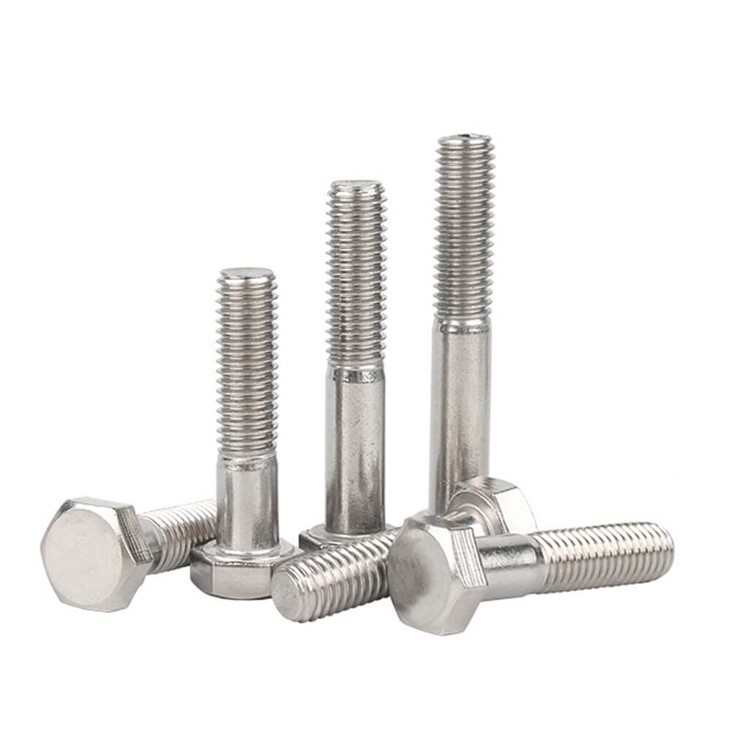
As a titanium bolt supplier, I understand the importance of choosing the right fastener for your specific application. If you are looking for lightweight and corrosion - resistant bolts, our Titanium Half Thread Hexagon Bolt could be an excellent choice. We offer a wide range of titanium bolts with different specifications to meet your needs.
If you have any questions or would like to discuss your requirements further, please feel free to contact us. We are committed to providing you with the best products and services.
References
- ASM Handbook Volume 2: Properties and Selection: Nonferrous Alloys and Special - Purpose Materials.
- Metals Handbook Desk Edition, 3rd Edition.
- Various technical papers on titanium and nickel - based alloys from industry conferences and research institutions.