

Titanium hub bolts are crucial components in various industries, especially automotive and aerospace, due to their high strength, low weight, and excellent corrosion resistance. As a supplier of Titanium Hub Bolts, I often receive inquiries about their chemical resistance. In this blog, I will delve into the chemical resistance of Titanium Hub Bolts, exploring the factors that influence it and its significance in different applications.
Understanding Titanium's Chemical Properties
Titanium is a transition metal with unique chemical properties that contribute to its excellent resistance to corrosion. It has a high affinity for oxygen, which forms a thin, protective oxide layer on its surface when exposed to air. This oxide layer, primarily composed of titanium dioxide (TiO₂), is extremely stable and adheres tightly to the metal surface. It acts as a barrier, preventing further oxidation and protecting the underlying titanium from chemical attack.
The stability of the titanium dioxide layer is due to its high bond strength and low solubility in most environments. It can withstand a wide range of temperatures, pressures, and chemical conditions, making titanium highly resistant to corrosion in many aggressive media. However, the chemical resistance of titanium can be affected by several factors, including the composition of the environment, temperature, and the presence of certain contaminants.
Chemical Resistance in Different Environments
Aqueous Solutions
Titanium hub bolts exhibit excellent resistance to corrosion in most aqueous solutions, including fresh water, seawater, and many acids and alkalis. In fresh water, the protective oxide layer remains intact, providing long - term protection against corrosion. Seawater, which contains high concentrations of chloride ions, is a highly corrosive environment for many metals. However, titanium's oxide layer is stable in seawater, and it resists pitting and crevice corrosion, making it an ideal choice for marine applications.
In acidic environments, the chemical resistance of titanium depends on the type and concentration of the acid. Titanium is highly resistant to non - reducing acids such as nitric acid and chromic acid. In these acids, the oxide layer is maintained, and the metal shows little or no corrosion. For example, in concentrated nitric acid, titanium can be used for long - term storage and handling equipment.
However, titanium is less resistant to reducing acids such as hydrochloric acid and sulfuric acid. In these acids, at high concentrations and elevated temperatures, the oxide layer can be attacked, leading to corrosion. The rate of corrosion increases with increasing acid concentration and temperature. For instance, in concentrated hydrochloric acid, titanium may experience significant corrosion, especially at temperatures above room temperature.
In alkaline solutions, titanium generally shows good resistance. The oxide layer is stable in most alkaline media, and corrosion rates are very low. This makes titanium suitable for use in applications involving contact with alkalis, such as in some chemical processing plants.
Organic Solvents
Titanium hub bolts are also resistant to many organic solvents. Organic solvents such as alcohols, ketones, and esters have little effect on the protective oxide layer of titanium. This resistance makes titanium a good choice for applications in the chemical industry, where it may come into contact with various organic solvents during the manufacturing process.
However, some organic solvents containing halogens, such as chlorinated hydrocarbons, can be aggressive to titanium under certain conditions. In the presence of moisture and elevated temperatures, chlorinated hydrocarbons can cause stress corrosion cracking in titanium. Therefore, when using titanium hub bolts in environments where they may be exposed to halogen - containing organic solvents, careful consideration of the operating conditions is necessary.
Factors Affecting Chemical Resistance
Temperature
Temperature plays a significant role in the chemical resistance of titanium hub bolts. As the temperature increases, the rate of chemical reactions generally increases. In corrosive environments, higher temperatures can accelerate the breakdown of the protective oxide layer, leading to increased corrosion rates. For example, in acidic solutions, the corrosion rate of titanium can increase significantly with increasing temperature. Therefore, when selecting titanium hub bolts for high - temperature applications, the chemical environment and the maximum operating temperature must be carefully evaluated.
Contaminants
The presence of certain contaminants can also affect the chemical resistance of titanium. For example, the presence of heavy metal ions, such as copper and iron, in a corrosive environment can accelerate the corrosion of titanium. These heavy metal ions can act as catalysts for corrosion reactions, breaking down the protective oxide layer. Additionally, the presence of abrasive particles in a fluid can damage the oxide layer, exposing the underlying titanium to chemical attack.

Significance of Chemical Resistance in Applications
The excellent chemical resistance of titanium hub bolts makes them suitable for a wide range of applications. In the automotive industry, titanium hub bolts are used in high - performance vehicles. They can withstand the harsh chemical environment under the hood, including exposure to engine coolant, oil, and road salt. The chemical resistance ensures the long - term integrity of the bolts, reducing the risk of corrosion - induced failures.
In the aerospace industry, where weight and reliability are critical, titanium hub bolts are widely used. They can withstand the corrosive effects of jet fuel, hydraulic fluids, and the high - altitude environment. The chemical resistance of titanium helps to maintain the structural integrity of the aircraft, ensuring safe and efficient operation.
In the chemical processing industry, titanium hub bolts are used in equipment such as reactors, distillation columns, and pipelines. They can resist the corrosive effects of various chemicals, including acids, alkalis, and organic solvents. This reduces the need for frequent replacement of bolts, resulting in cost savings and increased productivity.
Our Titanium Hub Bolt Offerings and Contact
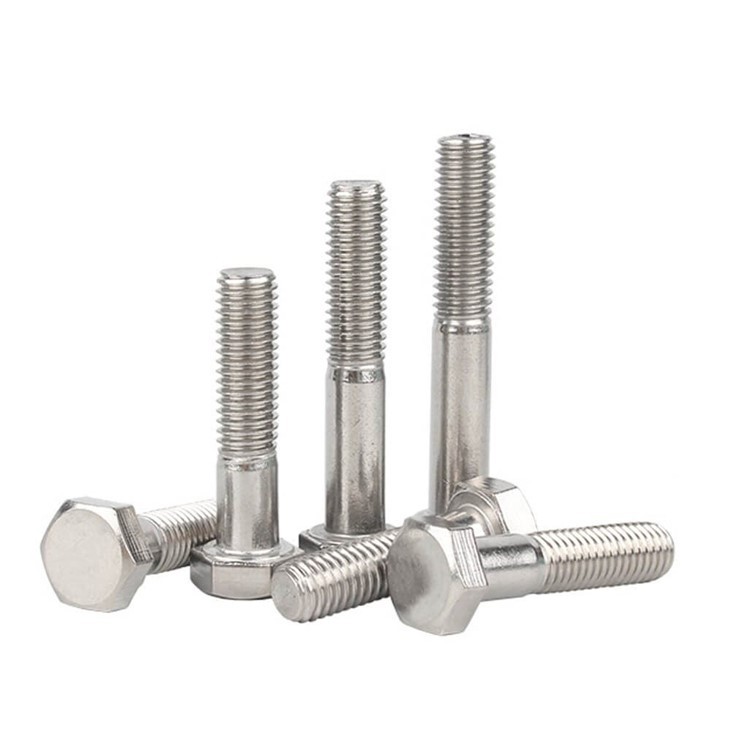
As a supplier of Titanium Hub Bolts, we offer a wide range of products with high - quality and excellent chemical resistance. Our Titanium Half Thread Hexagon Bolt is one of our popular products, which is designed to meet the strict requirements of different industries. It is made of high - grade titanium, ensuring reliable performance in various chemical environments.
If you are interested in our Titanium Hub Bolts and want to discuss your specific requirements, please feel free to contact us. We are committed to providing you with the best solutions and products to meet your needs. Our team of experts is ready to assist you in selecting the most suitable titanium hub bolts for your application.
References
- “Titanium: Properties, Processing, and Applications” by Johnson, J. et al.
- “Corrosion Resistance of Titanium Alloys” published by the International Titanium Association.
- “Materials Science in Engineering” textbook by Callister, W. D.


