

As a supplier of Titanium Color Bolts, I often get asked about the heat resistance of these remarkable fasteners. Titanium Color Bolts are not only known for their aesthetic appeal but also for their outstanding performance under various conditions, including high - temperature environments. In this blog, I'll delve into the heat resistance of Titanium Color Bolts, exploring the science behind it and its implications for different applications.

Understanding Titanium's Fundamental Properties
Titanium is a transition metal with unique physical and chemical properties. It has a relatively low density, which makes it lightweight compared to many other metals. At the same time, it offers high strength, making it an ideal material for applications where weight reduction and high - performance are crucial.
One of the most significant properties of titanium is its excellent corrosion resistance. This is due to the formation of a thin, stable oxide layer on its surface when exposed to oxygen. This oxide layer acts as a protective barrier, preventing further oxidation and corrosion. When it comes to heat resistance, this oxide layer also plays a vital role.
Heat Resistance Mechanisms of Titanium
The heat resistance of titanium is primarily determined by its ability to form and maintain a stable oxide layer at elevated temperatures. When titanium is heated, the oxygen in the air reacts with the surface of the metal to form titanium dioxide (TiO₂). This oxide layer has high melting and boiling points and is chemically stable.
As the temperature rises, the oxide layer thickens gradually. However, it remains adherent to the titanium surface, which is crucial for maintaining the integrity of the material. This adherence prevents the underlying titanium from direct contact with oxygen, thus reducing the rate of oxidation.
In addition, titanium has a relatively high melting point of around 1668°C (3034°F). This means that it can withstand high temperatures without melting, which is a key factor in its heat - resistant capabilities. The high melting point allows titanium to retain its structural integrity and mechanical properties even in extreme heat.
Heat Resistance of Titanium Color Bolts
Titanium Color Bolts are made from titanium alloys, which may have slightly different heat - resistant properties compared to pure titanium. The color on these bolts is usually achieved through an anodizing process, which creates a thin, decorative, and protective oxide layer on the surface.
The anodized layer on Titanium Color Bolts not only enhances their appearance but also contributes to their heat resistance. It acts as an additional barrier against oxidation and can improve the overall stability of the bolt at high temperatures.
Under normal operating conditions, Titanium Color Bolts can withstand temperatures up to several hundred degrees Celsius. For example, in many industrial applications, they can operate effectively at temperatures ranging from 200°C to 600°C (392°F to 1112°F). However, the exact heat - resistant limit depends on several factors, including the specific titanium alloy used, the thickness of the anodized layer, and the duration of exposure to high temperatures.
Applications Benefiting from Heat Resistance
The heat - resistant properties of Titanium Color Bolts make them suitable for a wide range of applications.
Aerospace Industry
In the aerospace industry, weight reduction is of utmost importance. Titanium Color Bolts, with their high strength - to - weight ratio and heat resistance, are widely used in aircraft engines, airframes, and other components. For instance, in jet engines, where temperatures can reach extremely high levels, these bolts can maintain their mechanical properties, ensuring the safety and reliability of the aircraft.
Automotive Industry
In the automotive industry, Titanium Color Bolts are used in high - performance engines and exhaust systems. The high temperatures generated in these parts require fasteners that can withstand heat without losing their strength. The heat resistance of Titanium Color Bolts allows them to perform well in these demanding environments, contributing to the overall performance and durability of the vehicle.
Chemical and Petrochemical Industry
In the chemical and petrochemical industry, equipment often operates at high temperatures and in corrosive environments. Titanium Color Bolts are an excellent choice for these applications because of their combined heat - resistant and corrosion - resistant properties. They can be used in reactors, pipelines, and other equipment where high - temperature and chemical - resistant fasteners are required.
Comparison with Other Materials
When compared to other common fastener materials such as steel and aluminum, Titanium Color Bolts have distinct advantages in terms of heat resistance.
Steel bolts are widely used due to their relatively low cost and high strength. However, steel has a lower melting point than titanium and is more prone to oxidation at high temperatures. When exposed to heat, steel bolts can rust and lose their strength, which can lead to mechanical failures.
Aluminum bolts are lightweight but have a very low melting point. They are not suitable for applications where high - temperature resistance is required. In contrast, Titanium Color Bolts offer a combination of lightweight, high strength, and excellent heat resistance, making them a superior choice for many high - temperature applications.
Factors Affecting Heat Resistance
As mentioned earlier, several factors can affect the heat resistance of Titanium Color Bolts.
Alloy Composition
Different titanium alloys have different heat - resistant properties. Some alloys are specifically designed to have enhanced heat resistance by adding elements such as aluminum, vanadium, or molybdenum. These alloying elements can improve the strength, oxidation resistance, and high - temperature stability of the titanium.
Surface Finish
The surface finish of Titanium Color Bolts, especially the anodized layer, can affect their heat resistance. A thicker and more uniform anodized layer can provide better protection against oxidation and heat. However, improper anodizing processes can lead to defects in the layer, which may reduce the heat - resistant performance of the bolt.
Duration of Exposure
The longer the Titanium Color Bolt is exposed to high temperatures, the more likely its properties will change. Prolonged exposure to high heat can cause the oxide layer to grow thicker and may lead to some degradation of the mechanical properties of the bolt. Therefore, it is important to consider the duration of high - temperature exposure when selecting Titanium Color Bolts for a particular application.
Conclusion
In conclusion, Titanium Color Bolts offer excellent heat - resistant properties due to the inherent characteristics of titanium and the additional protection provided by the anodized layer. Their ability to withstand high temperatures makes them suitable for a wide range of applications in industries such as aerospace, automotive, and chemical.
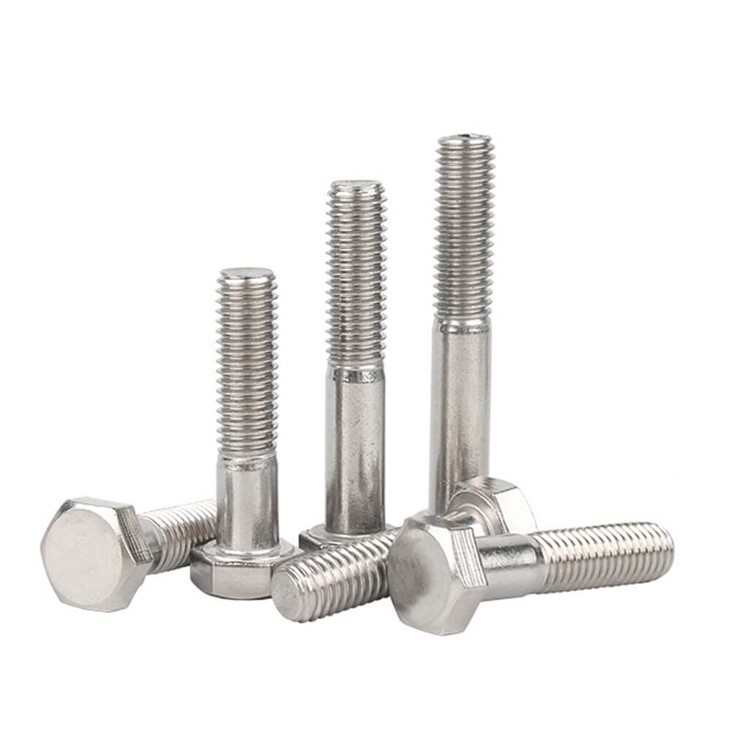
As a supplier of Titanium Color Bolts, I am committed to providing high - quality products that meet the heat - resistant requirements of various applications. If you are looking for reliable and heat - resistant fasteners, our Titanium Half Thread Hexagon Bolt is an excellent choice.
If you have any questions about the heat resistance of our Titanium Color Bolts or if you are interested in purchasing them for your project, please feel free to contact us for further discussion. We are more than happy to assist you in finding the right fasteners for your specific needs.
References
- "Titanium: A Technical Guide" by John R. Davis
- "Materials Science and Engineering: An Introduction" by William D. Callister, Jr. and David G. Rethwisch
- Industry reports on aerospace, automotive, and chemical applications of titanium fasteners.


