

As a supplier of Titanium Hub Bolts, I've encountered numerous inquiries from customers regarding the installation process, specifically, whether these bolts require a special tool for installation. Today, I'll delve into this topic, providing a comprehensive analysis of the matter.
Understanding Titanium Hub Bolts
Titanium hub bolts are renowned for their exceptional properties. Titanium is a lightweight yet incredibly strong metal, with a high strength - to - weight ratio. This makes titanium hub bolts ideal for applications where weight reduction is crucial without sacrificing strength, such as in the automotive and aerospace industries.

The corrosion resistance of titanium is another outstanding feature. Unlike steel bolts, which can rust and corrode over time, titanium hub bolts maintain their integrity even in harsh environments. This is particularly important for components that are exposed to moisture, chemicals, or extreme temperatures.
The Installation Process of Regular Bolts
Before discussing whether special tools are needed for titanium hub bolts, let's first understand the general installation process of regular bolts. For most standard bolts, a basic set of tools is usually sufficient. A wrench, either an open - end wrench or a socket wrench, is commonly used to tighten the bolt. The size of the wrench is determined by the bolt's head size.
When installing a bolt, it is essential to apply the correct torque. Torque is the rotational force applied to the bolt, and it ensures that the bolt is tightened to the appropriate level. Over - tightening can lead to bolt failure, while under - tightening can cause the joint to loosen over time. For regular steel bolts, a torque wrench is often used to measure and apply the correct torque.
Do Titanium Hub Bolts Require Special Tools?
The answer to whether titanium hub bolts require special tools for installation is not a simple yes or no.
Special Considerations for Titanium
Titanium has different mechanical properties compared to steel. It has a lower modulus of elasticity, which means it can deform more under load. Additionally, titanium has a higher coefficient of thermal expansion, which can affect the torque requirements during installation.
Due to these unique properties, some experts recommend using a torque - angle method for installing titanium bolts. This method involves tightening the bolt to a specific initial torque and then rotating it a certain number of degrees. This ensures that the bolt is properly stretched and pre - loaded, reducing the risk of loosening.
To implement the torque - angle method, a torque - angle wrench is required. This is a specialized tool that can measure both the torque applied to the bolt and the angle of rotation. While not strictly necessary for all titanium hub bolt installations, a torque - angle wrench can significantly improve the accuracy and reliability of the installation.
Size and Design
The size and design of the titanium hub bolt can also influence the need for special tools. Some titanium hub bolts may have unique head designs, such as a hex socket head or a Torx head. These non - standard head designs require specialized wrenches to tighten and loosen the bolts.
For example, if a titanium hub bolt has a hex socket head, a hex socket wrench is needed. Similarly, a Torx - compatible wrench is required for bolts with a Torx head. These specialized wrenches ensure a proper fit and prevent damage to the bolt head during installation.
Anti - Seize Compounds
When installing titanium hub bolts, it is often recommended to use an anti - seize compound. Titanium has a tendency to gall, which is a form of adhesive wear that can occur when two metal surfaces rub against each other under high pressure. An anti - seize compound reduces friction and prevents galling, making it easier to install and remove the bolts.
Applying an anti - seize compound requires a brush or a similar applicator. While not a traditional "tool" in the sense of tightening or loosening bolts, it is an important accessory for the installation process.
Our Product Range
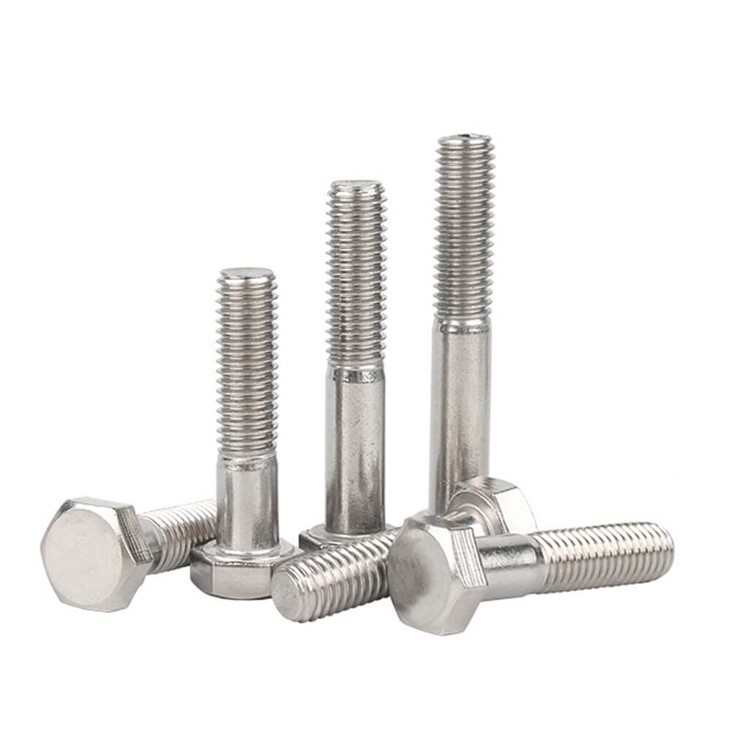
At our company, we offer a wide range of Titanium Hub Bolts, including the Titanium Half Thread Hexagon Bolt. These bolts are manufactured to the highest quality standards, ensuring excellent performance and reliability.
Our titanium hub bolts are available in various sizes and specifications to meet the diverse needs of our customers. Whether you are in the automotive, aerospace, or other industries, we have the right bolt for your application.
Recommendations for Installation
If you are planning to install titanium hub bolts, here are some recommendations:
- Use the Right Tools: As discussed, depending on the bolt's design and the installation method, you may need specialized tools such as a torque - angle wrench, hex socket wrenches, or Torx wrenches.
- Follow the Manufacturer's Instructions: Each bolt may have specific installation requirements. Always refer to the manufacturer's instructions for the correct torque values and installation procedures.
- Apply Anti - Seize Compound: To prevent galling and ensure easy installation and removal, apply an appropriate anti - seize compound to the bolt threads.
Contact Us for Procurement
If you are interested in purchasing our Titanium Hub Bolts or have any questions about their installation, we encourage you to contact us. Our team of experts is ready to assist you with your procurement needs and provide technical support. Whether you need a small quantity for a prototype or a large - scale order for production, we can offer competitive pricing and reliable delivery.
References
- ASM Handbook, Volume 2: Properties and Selection: Nonferrous Alloys and Special - Purpose Materials.
- Machinery's Handbook, 31st Edition.
- Titanium: A Technical Guide, Second Edition by J. R. Davis.

