

Torquing Black Titanium Bolts correctly is crucial for ensuring the safety, reliability, and performance of any application where these bolts are used. As a supplier of high - quality Black Titanium Bolts, I understand the importance of this process and am here to share some in - depth knowledge on how to do it right.
Understanding Black Titanium Bolts
Black Titanium Bolts are not just ordinary fasteners. They are made from titanium, a metal known for its exceptional strength - to - weight ratio, corrosion resistance, and biocompatibility. The black coating on these bolts not only gives them an aesthetically pleasing appearance but also provides additional protection against wear and tear.
Titanium has a lower modulus of elasticity compared to steel, which means it will stretch more under load. This characteristic has significant implications when it comes to torquing these bolts. If not torqued correctly, it can lead to issues such as over - tightening, which may cause the bolt to break or damage the mating parts, or under - tightening, which can result in the joint coming loose over time.
The Importance of Correct Torque
Proper torque is essential for creating a secure and stable joint. When a bolt is torqued correctly, it creates a clamping force that holds the two or more parts together. This clamping force is what prevents the parts from moving relative to each other, reducing the risk of vibration - induced loosening and ensuring the integrity of the assembly.
In applications such as automotive engines, aerospace components, or high - performance machinery, the consequences of incorrect torque can be severe. A loose bolt can lead to catastrophic failures, while an over - tightened bolt can cause material deformation, thread stripping, or even structural damage.
Factors Affecting Torque
Several factors can affect the torque required for Black Titanium Bolts.
Bolt Size and Grade
The size and grade of the bolt play a significant role in determining the appropriate torque. Larger bolts generally require more torque to achieve the same clamping force as smaller bolts. Similarly, higher - grade bolts can withstand higher loads and may require more torque to be properly tightened.

Surface Finish
The surface finish of the bolt and the mating parts can affect the friction between them. A smoother surface finish will result in less friction, which means that less torque is required to achieve the desired clamping force. On the other hand, a rough surface finish will increase friction and may require more torque.
Lubrication
Lubrication can also have a significant impact on torque. When a bolt is lubricated, the friction between the threads and the mating surfaces is reduced. This means that less torque is needed to achieve the same clamping force. However, it is important to use the correct type of lubricant, as some lubricants may not be compatible with titanium.
Torque Calculation
Calculating the correct torque for Black Titanium Bolts involves considering the factors mentioned above. The most common method for calculating torque is using the formula:
[T = K \times D\times F]
Where:
- (T) is the torque in inch - pounds or Newton - meters
- (K) is the torque coefficient, which takes into account the friction between the threads and the mating surfaces
- (D) is the nominal diameter of the bolt
- (F) is the desired clamping force
The torque coefficient (K) can vary depending on the surface finish, lubrication, and other factors. For unlubricated titanium bolts, the (K) value typically ranges from 0.18 to 0.22. For lubricated bolts, the (K) value can be as low as 0.12.
Tools for Torquing
To ensure accurate torque, it is essential to use the right tools.
Torque Wrenches
Torque wrenches are the most common tool used for torquing bolts. There are several types of torque wrenches available, including click - type, beam - type, and digital torque wrenches.
Click - type torque wrenches are the most popular. They are easy to use and provide an audible click when the preset torque is reached. Beam - type torque wrenches are less expensive but require the user to read the torque value from a scale. Digital torque wrenches are the most accurate and can provide real - time torque readings.
Torque Multipliers
In some cases, especially when dealing with large or high - torque bolts, a torque multiplier may be required. A torque multiplier is a tool that amplifies the input torque, allowing the user to apply more torque with less effort.
Step - by - Step Torquing Process
Here is a step - by - step guide on how to torque Black Titanium Bolts correctly:
Step 1: Prepare the Parts
Clean the bolt and the mating parts to remove any dirt, debris, or contaminants. Check the threads for damage or defects. If necessary, apply a compatible lubricant to the threads and the mating surfaces.
Step 2: Select the Right Tool
Choose the appropriate torque wrench or torque multiplier based on the size and grade of the bolt and the required torque.
Step 3: Set the Torque
Refer to the manufacturer's specifications or use the torque calculation formula to determine the correct torque for the bolt. Set the torque wrench to the appropriate value.
Step 4: Tighten the Bolt
Place the torque wrench on the bolt and slowly apply torque in a clockwise direction. Stop applying torque as soon as the torque wrench indicates that the preset torque has been reached.
Step 5: Check the Torque
After tightening the bolt, it is a good practice to check the torque again to ensure that it is within the specified range.
Special Considerations for Black Titanium Bolts
When working with Black Titanium Bolts, there are some special considerations.
Avoid Over - Tightening
As mentioned earlier, titanium has a lower modulus of elasticity than steel, which means it is more prone to over - tightening. It is important to follow the recommended torque values carefully to avoid damaging the bolt or the mating parts.
Use the Right Socket
When using a torque wrench, make sure to use a socket that is specifically designed for titanium bolts. A socket that is too large or too small can damage the bolt head or the threads.
Check for Damage
Inspect the bolts regularly for signs of damage, such as cracks, corrosion, or thread stripping. If any damage is detected, replace the bolt immediately.
Conclusion
Torquing Black Titanium Bolts correctly is a critical process that requires careful consideration of several factors. By understanding the properties of titanium, the factors affecting torque, and using the right tools and techniques, you can ensure that your Black Titanium Bolts are properly tightened and provide reliable performance.
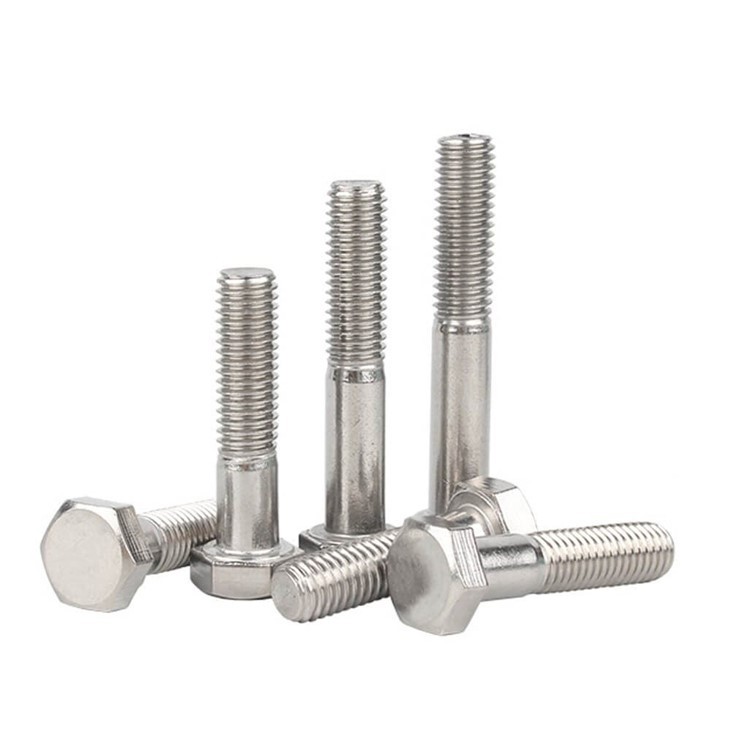
As a supplier of Black Titanium Bolts, we offer a wide range of high - quality products, including the Titanium Half Thread Hexagon Bolt. Our bolts are manufactured to the highest standards and are designed to meet the most demanding applications.
If you are in need of Black Titanium Bolts or have any questions about torquing them, please feel free to contact us. We are here to provide you with the best products and technical support to ensure your projects are successful.
References
- Machinery's Handbook, 31st Edition
- Titanium: A Technical Guide, ASM International
- Fastener Handbook, Industrial Fasteners Institute


