

When it comes to fasteners, the weight of a bolt is a crucial factor that can significantly impact various applications. As a supplier of high-quality Titanium Bolts, I've witnessed firsthand the growing interest in titanium's unique properties, especially its weight advantage over other types of bolts. In this blog post, I'll delve into the weight comparison between titanium bolts and their counterparts, exploring why titanium is becoming the preferred choice for many industries.
Understanding the Basics of Bolt Materials
Before we compare the weights, it's essential to understand the common materials used in bolt manufacturing. The most widely used materials include steel, stainless steel, and titanium. Each material has its own set of characteristics, which determine its suitability for different applications.
Steel Bolts
Steel is one of the most common materials for bolts due to its high strength and relatively low cost. It comes in various grades, each with different levels of strength and corrosion resistance. However, steel is relatively heavy, which can be a drawback in applications where weight is a critical factor.
Stainless Steel Bolts
Stainless steel bolts offer excellent corrosion resistance, making them ideal for use in harsh environments. They are also stronger than regular steel bolts and have a longer lifespan. However, like steel bolts, stainless steel bolts are relatively heavy, which can limit their use in weight-sensitive applications.
Titanium Bolts
Titanium is a lightweight, strong, and corrosion-resistant metal that has gained popularity in recent years. It has a high strength-to-weight ratio, which means it can provide the same level of strength as steel or stainless steel bolts while weighing significantly less. Titanium bolts are also highly resistant to corrosion, making them suitable for use in marine, aerospace, and other harsh environments.
Weight Comparison: Titanium Bolts vs. Other Bolts
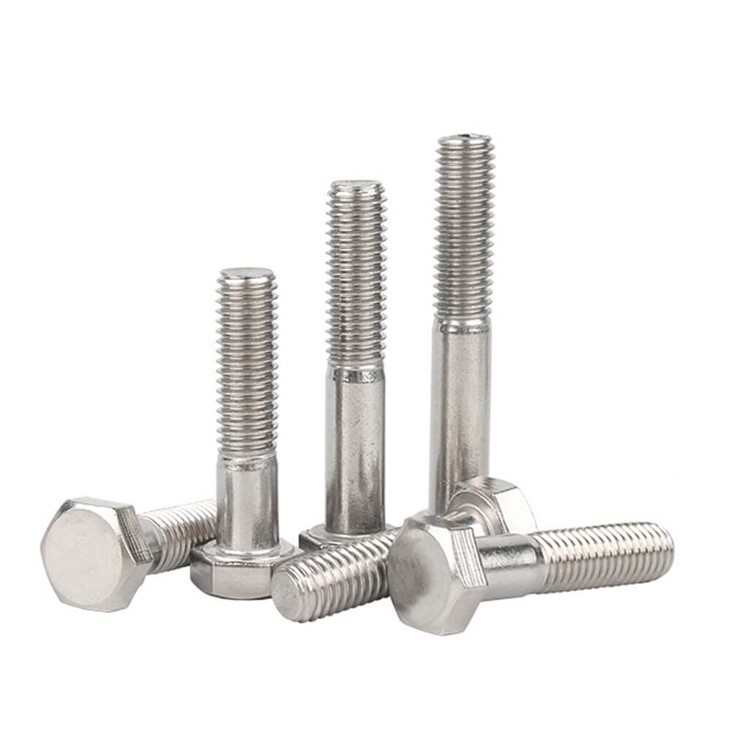
To understand the weight advantage of titanium bolts, let's compare them to steel and stainless steel bolts of the same size and grade. The following table provides a general comparison of the weights of titanium, steel, and stainless steel bolts:

| Bolt Material | Density (g/cm³) | Weight Comparison |
|---|---|---|
| Steel | 7.85 | Heavier than titanium |
| Stainless Steel | 7.9 - 8.0 | Heavier than titanium |
| Titanium | 4.51 | Significantly lighter than steel and stainless steel |
As you can see from the table, titanium has a much lower density than steel and stainless steel. This means that a titanium bolt of the same size and grade will weigh significantly less than a steel or stainless steel bolt. For example, a titanium bolt may weigh up to 40% less than a steel bolt of the same size and strength.
Real-World Applications of Titanium Bolts
The weight advantage of titanium bolts makes them ideal for a wide range of applications where weight is a critical factor. Some of the most common applications include:
Aerospace Industry
In the aerospace industry, every gram counts. Titanium bolts are widely used in aircraft and spacecraft construction due to their lightweight and high strength. They help reduce the overall weight of the vehicle, which in turn improves fuel efficiency and performance.
Marine Industry
The marine environment is harsh and corrosive, making it essential to use bolts that can withstand these conditions. Titanium bolts are highly resistant to corrosion, making them an excellent choice for marine applications. They are also lightweight, which helps reduce the weight of the vessel and improve its maneuverability.
Motorsports Industry
In the motorsports industry, weight reduction is crucial for improving speed and performance. Titanium bolts are used in high-performance engines, suspension systems, and other components to reduce weight and improve overall performance.
Medical Industry
Titanium is biocompatible, which means it is not rejected by the human body. This makes it an ideal material for medical implants, such as bone screws and plates. Titanium bolts are also used in medical equipment, where their lightweight and corrosion resistance are highly valued.
The Cost of Titanium Bolts
While titanium bolts offer significant weight advantages and other benefits, they are generally more expensive than steel or stainless steel bolts. The higher cost is due to the high cost of titanium raw materials and the complex manufacturing processes involved. However, in many applications, the benefits of using titanium bolts outweigh the higher cost. For example, in the aerospace industry, the fuel savings and performance improvements achieved by using titanium bolts can offset the higher initial cost.
Conclusion
In conclusion, the weight of a titanium bolt is significantly less than that of a steel or stainless steel bolt of the same size and grade. This weight advantage, combined with its high strength, corrosion resistance, and other benefits, makes titanium bolts an ideal choice for many applications where weight is a critical factor. As a supplier of Titanium Half Thread Hexagon Bolt, I'm committed to providing high-quality titanium bolts that meet the needs of our customers. If you're interested in learning more about our titanium bolts or have any questions, please don't hesitate to contact us. We'd be happy to discuss your specific requirements and help you find the right bolts for your application.
References
- "Titanium: Properties, Production, and Applications." ASM International, 2000.
- "Fasteners: Design, Materials, and Applications." McGraw-Hill, 2004.
- "Aerospace Materials and Processes." John Wiley & Sons, 2012.


