

Hey there! As a supplier of titanium bolts, I've been getting a lot of questions lately about how these bad boys perform in radiation - exposed environments. So, I thought I'd sit down and share what I know.
First off, let's talk a bit about titanium. Titanium is an amazing metal. It's strong, lightweight, and highly corrosion - resistant. These properties make it a popular choice in a wide range of industries, from aerospace to medical. But when it comes to radiation, how does it hold up?
One of the key factors in determining how a material performs in a radiation - exposed environment is its atomic structure. Titanium has a relatively stable atomic structure. The electrons in its atoms are arranged in a way that gives it a certain level of resistance to the effects of radiation. When radiation hits a material, it can cause ionization, which means it knocks electrons out of their normal positions in the atoms. This can lead to changes in the material's properties, like its strength and conductivity.
In the case of titanium, its stable atomic structure helps to minimize the amount of ionization that occurs. The electrons are held tightly enough that they're not easily knocked loose by radiation. This means that titanium bolts can maintain their structural integrity even when exposed to relatively high levels of radiation.
Another important aspect is the formation of defects in the material. Radiation can create defects in the crystal lattice of a metal. These defects can act as weak points, reducing the material's strength and ductility. However, titanium has a good ability to self - heal these defects to some extent. The atoms in titanium can rearrange themselves to fill in small gaps and correct minor structural irregularities caused by radiation.
Now, let's get a bit more specific about the performance of titanium bolts. When it comes to mechanical properties, titanium bolts can retain their strength and toughness in radiation - exposed environments. For example, in nuclear power plants, where there are high levels of radiation, titanium bolts are often used in various components. They can withstand the stresses and strains of the operating conditions without significant degradation.
The corrosion resistance of titanium also plays a crucial role. In a radiation - exposed environment, there may be other factors at play, like the presence of corrosive chemicals or high humidity. Titanium's natural oxide layer provides excellent protection against corrosion. This means that the bolts won't rust or corrode easily, even when exposed to radiation and other harsh conditions.
But it's not all perfect. There are some limitations. At extremely high radiation doses, the self - healing ability of titanium may be overwhelmed. The number of defects created in the crystal lattice can become so large that the material starts to lose its mechanical properties. Also, the long - term effects of radiation on titanium are still being studied. There may be some subtle changes in the material over time that we don't fully understand yet.
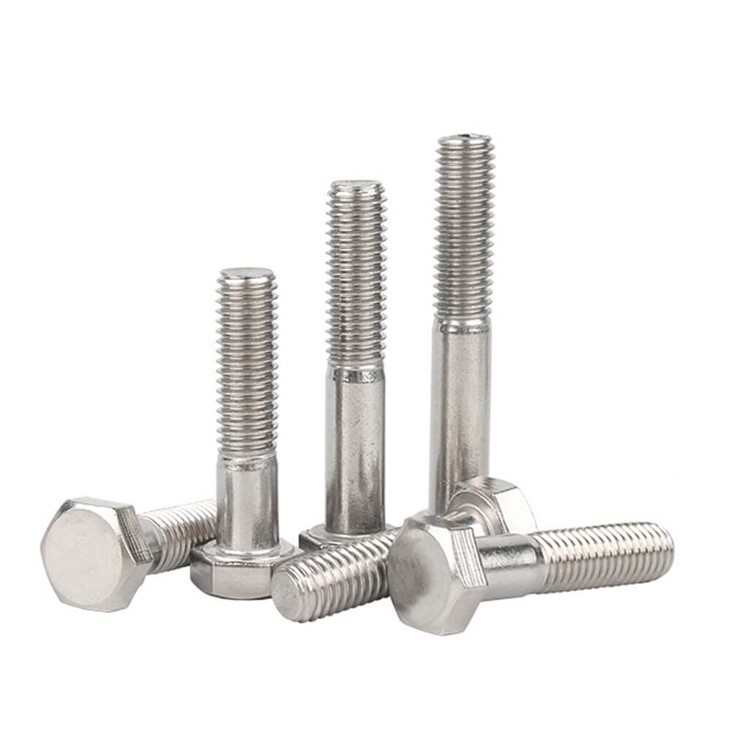
If you're in the market for titanium bolts for a radiation - exposed application, you might want to consider the Titanium Half Thread Hexagon Bolt. These bolts are designed with precision and are made from high - quality titanium. They offer a great combination of strength, corrosion resistance, and performance in challenging environments.

When choosing titanium bolts for a radiation - exposed project, it's important to work with a reliable supplier. We, as a supplier, have a strict quality control process in place. We test our bolts to ensure they meet the highest standards. We also have a team of experts who can provide you with technical support and advice on the best type of bolts for your specific needs.
If you're interested in learning more about how our titanium bolts can perform in your radiation - exposed environment, or if you want to discuss a potential purchase, don't hesitate to reach out. We're here to help you find the right solutions for your project. Whether it's a small - scale research project or a large - scale industrial application, we've got the expertise and the products to meet your requirements.
In conclusion, titanium bolts have some great advantages when it comes to performance in radiation - exposed environments. Their stable atomic structure, self - healing ability, and corrosion resistance make them a reliable choice. However, like any material, they have their limitations, especially at extremely high radiation doses. But with proper selection and application, they can serve you well in a variety of radiation - related applications. So, if you're looking for high - quality titanium bolts, give us a shout, and let's start a conversation about your needs.
References
- "Materials Science and Engineering: An Introduction" by William D. Callister Jr. and David G. Rethwisch
- Research papers on the effects of radiation on metals from scientific journals such as "Journal of Nuclear Materials"


