

Hey there! As a supplier of titanium bolts, I've been getting a lot of questions lately about how these little guys perform in cryogenic environments. Cryogenic environments, for those who aren't in the know, are super cold places, usually below -150°C (-238°F). Think outer space, some high - tech scientific research facilities, or even certain industrial processes. So, let's dive right in and explore how titanium bolts hold up in these frosty conditions.
First off, let's talk about why titanium is even being considered for use in cryogenic applications. Titanium has some pretty amazing properties that make it a top - notch choice. One of the biggies is its strength - to - weight ratio. Titanium is incredibly strong, yet it's much lighter than steel. This is a huge advantage in many cryogenic setups, especially in aerospace where every ounce matters. For example, in rockets or satellites that operate in the cold vacuum of space, using titanium bolts can help reduce overall weight without sacrificing structural integrity.
Another great thing about titanium is its corrosion resistance. In cryogenic environments, there can be all sorts of chemicals and moisture that could cause regular metals to rust or corrode. Titanium forms a thin, protective oxide layer on its surface that shields it from these corrosive elements. This means that titanium bolts can last a long time, even in the harshest cryogenic conditions.
Now, let's get into the nitty - gritty of how titanium bolts actually perform in the cold. One of the key factors to consider is how the material behaves as the temperature drops. At cryogenic temperatures, many metals become brittle. Brittle materials are more likely to crack or break under stress. But titanium is different. It retains its ductility, which means it can still bend and deform a bit without shattering. This is crucial in cryogenic applications where there can be mechanical stresses due to expansion and contraction of materials as the temperature changes.
For instance, in a cryogenic storage tank, the tank walls and other components will expand and contract as the temperature fluctuates during filling and emptying. Titanium bolts can handle these stresses better than some other materials because they don't become as brittle. This helps maintain the integrity of the tank and prevents leaks or structural failures.
Titanium also has a relatively low coefficient of thermal expansion. What does that mean? Well, when a material heats up or cools down, it expands or contracts. The coefficient of thermal expansion tells us how much a material will change in size with a change in temperature. A low coefficient means that the material doesn't change size as much. In a cryogenic environment, this is a huge plus. It means that titanium bolts won't loosen or tighten up too much due to temperature changes. This helps keep the connections secure and reliable.
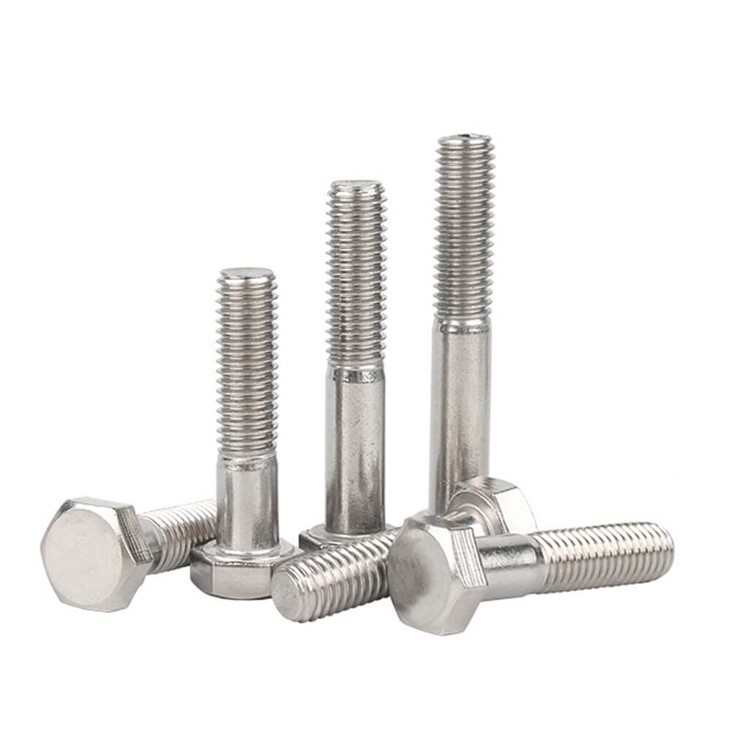
Let's take a look at a specific type of titanium bolt, the Titanium Half Thread Hexagon Bolt. These bolts are commonly used in many cryogenic applications. The half - thread design allows for a combination of a threaded section for secure fastening and an un - threaded section that can provide additional flexibility. In cryogenic setups, this flexibility can be very useful in dealing with the stresses caused by temperature changes.
The hexagon head on these bolts makes them easy to install and remove using standard tools. This is important in cryogenic maintenance and repair work, where access might be limited, and you need to be able to work quickly and efficiently.
Now, there are some things to keep in mind when using titanium bolts in cryogenic environments. One is the potential for galling. Galling is a form of wear that occurs when two metal surfaces rub against each other under high pressure. Titanium can be prone to galling, especially in dry conditions. To prevent this, it's important to use proper lubrication when installing titanium bolts in cryogenic applications. There are special lubricants available that are designed to work well in cold temperatures and can help reduce the risk of galling.
Another consideration is the cost. Titanium is more expensive than some other metals like steel. However, when you factor in the long - term benefits such as corrosion resistance, high strength - to - weight ratio, and good performance in cryogenic conditions, the cost can be justified. In many critical cryogenic applications, the reliability and durability of titanium bolts are worth the extra investment.

In some real - world applications, titanium bolts have proven their worth time and time again. In the aerospace industry, they are used in cryogenic fuel tanks for rockets. These tanks store liquid hydrogen and liquid oxygen at extremely low temperatures. The titanium bolts help keep the tanks sealed and structurally sound, ensuring the safety and success of space missions.
In scientific research, titanium bolts are used in cryogenic experiments. For example, in particle accelerators where superconducting magnets are cooled to cryogenic temperatures, titanium bolts are used to hold the components together. Their ability to perform well in the cold helps maintain the stability of the experimental setup.
So, if you're in the market for bolts for a cryogenic application, titanium bolts are definitely worth considering. They offer a unique combination of properties that make them well - suited for these challenging environments. Whether you're working on an aerospace project, a scientific experiment, or an industrial cryogenic process, titanium bolts can provide the reliability and performance you need.
If you're interested in learning more about our titanium bolts or want to discuss your specific requirements, don't hesitate to reach out. We're here to help you find the right solution for your cryogenic needs. We can provide detailed information about our products, answer any questions you might have, and even offer samples for testing.
References
- ASM Handbook, Volume 2: Properties and Selection: Nonferrous Alloys and Special - Purpose Materials
- Titanium: A Technical Guide, Second Edition by Don Eylon

