As a seasoned supplier of Titanium Color Bolts, I often encounter inquiries regarding the technical properties of our products. One question that frequently arises is about the thermal expansion coefficient of Titanium Color Bolts. In this blog post, I'll delve into the details of this crucial property, its significance, and how it relates to the performance of our Titanium Color Bolts.
Understanding Thermal Expansion
Before we discuss the thermal expansion coefficient of Titanium Color Bolts, it's essential to understand the concept of thermal expansion. Thermal expansion is the tendency of matter to change in volume in response to a change in temperature. When a material is heated, its atoms or molecules gain energy and start to vibrate more vigorously. This increased vibration causes the atoms to move further apart, resulting in an expansion of the material. Conversely, when a material is cooled, the atoms lose energy and move closer together, leading to contraction.
The thermal expansion of a material is quantified by its thermal expansion coefficient, which is defined as the fractional change in length or volume per unit change in temperature. There are two types of thermal expansion coefficients: the linear thermal expansion coefficient (α), which measures the change in length per unit length per degree Celsius, and the volumetric thermal expansion coefficient (β), which measures the change in volume per unit volume per degree Celsius. For most materials, the volumetric thermal expansion coefficient is approximately three times the linear thermal expansion coefficient.
Thermal Expansion Coefficient of Titanium
Titanium is a well - known metal valued for its high strength - to - weight ratio, corrosion resistance, and biocompatibility. The thermal expansion coefficient of pure titanium varies depending on its crystal structure and temperature range. At room temperature (around 20°C), the linear thermal expansion coefficient of commercially pure titanium (CP Ti) is approximately 8.6×10⁻⁶ /°C. This relatively low value indicates that titanium expands and contracts less than many other metals when subjected to temperature changes.
The thermal expansion coefficient of titanium alloys, which are commonly used in the production of Titanium Color Bolts, can differ from that of pure titanium. For example, the Ti - 6Al - 4V alloy, one of the most widely used titanium alloys, has a linear thermal expansion coefficient of about 9.4×10⁻⁶ /°C at room temperature. The addition of alloying elements such as aluminum and vanadium can influence the atomic structure and bonding within the material, thereby affecting its thermal expansion behavior.
Significance of Thermal Expansion Coefficient in Titanium Color Bolts
The thermal expansion coefficient of Titanium Color Bolts is of great importance in various applications. In engineering and construction, these bolts are often used in structures that are exposed to significant temperature variations. If the thermal expansion coefficient of the bolts is not compatible with that of the materials they are connecting, it can lead to several problems.
For instance, in a joint where a Titanium Color Bolt is used to fasten two components made of different materials, a large difference in thermal expansion coefficients can cause stress concentrations at the interface. When the temperature changes, the materials will expand or contract at different rates, which may result in loosening or tightening of the bolt. Over time, this can lead to joint failure, reduced structural integrity, and potential safety hazards.
In high - temperature applications, such as in aerospace and automotive engines, the low thermal expansion coefficient of titanium is an advantage. It allows the Titanium Color Bolts to maintain their dimensional stability and clamping force even under extreme temperature conditions. This is crucial for ensuring the proper functioning of critical components and preventing mechanical failures.
Our Titanium Color Bolts and Thermal Expansion
As a supplier of Titanium Color Bolts, we take great care in selecting the appropriate titanium alloys and manufacturing processes to ensure that our products have consistent and suitable thermal expansion properties. Our manufacturing facilities are equipped with advanced technology to precisely control the composition and microstructure of the titanium alloys, which in turn affects the thermal expansion coefficient.
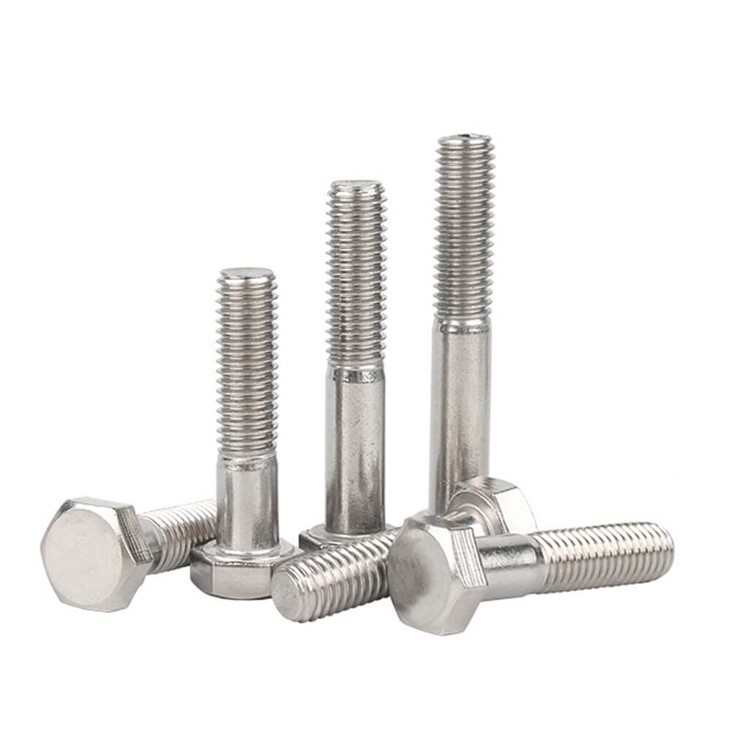
We offer a wide range of Titanium Color Bolts, including the Titanium Half Thread Hexagon Bolt. These bolts are made from high - quality titanium alloys that have been carefully chosen for their excellent mechanical properties and thermal stability. Our quality control team conducts rigorous testing on each batch of bolts to verify their thermal expansion coefficients and other key properties. This ensures that our customers receive products that meet or exceed their expectations in terms of performance and reliability.
How to Consider Thermal Expansion in Your Projects
When using Titanium Color Bolts in your projects, it's important to consider the thermal environment in which they will operate. First, you need to determine the expected temperature range and the materials that the bolts will be connecting. Calculate the potential expansion or contraction of the bolts and the connected materials based on their respective thermal expansion coefficients.
If necessary, you can use thermal insulation or other temperature - control measures to minimize the temperature variations and reduce the stress on the bolts. Additionally, proper installation techniques, such as using the correct torque values, can help to ensure that the bolts maintain their clamping force even as the temperature changes.

Contact Us for Your Titanium Color Bolt Needs
If you're in the market for high - quality Titanium Color Bolts, look no further. As a leading supplier in the industry, we are committed to providing our customers with the best products and services. Our team of experts is always ready to assist you in selecting the right bolts for your specific applications, taking into account factors such as thermal expansion coefficient, strength requirements, and corrosion resistance.
Whether you're working on a small - scale project or a large - scale industrial application, we have the expertise and resources to meet your needs. Contact us today to start a discussion about your Titanium Color Bolt requirements. We look forward to partnering with you and helping you achieve success in your projects.
References
- ASM Handbook Volume 2: Properties and Selection: Nonferrous Alloys and Special - Purpose Materials. ASM International.
- "Titanium: A Technical Guide" by John C. Williams.